2011-FS In Stock
Description: Front-End Optical Receiver
| Part Number | 2011-FS |
|---|---|
| Category | Light Analysis |
| Manufacturer | Newport |
Need to purchase this item?
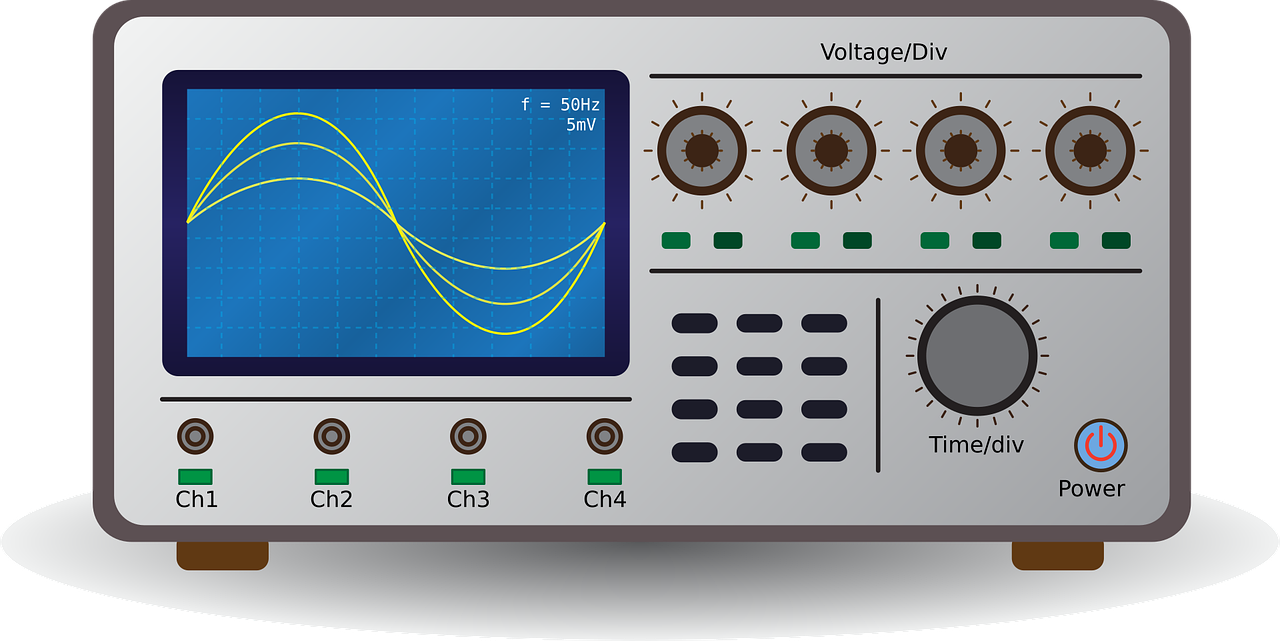
The 2011-FS by Newport is a Front-End Optical Receiver that is designed for the precise measurement of optical signals. Engineered with a focus on operational efficiency and adaptability, this receiver offers an array of features to facilitate seamless optical signal assessment. Equipped with adjustable high-pass and low-pass filters, as well as an impressive 90 dB adjustable electronic gain range, the 2011-FS enables the detection of optical signals at virtually any power level ranging from 1 µW to 10 mW while ensuring shot-noise-limited performance. Notably, this receiver includes a DC÷30 setting to prevent signal saturation due to DC-amplitude fluctuations.
The 2011-FS has exceptional power efficiency, drawing a static current of less than 1 mA. This efficiency allows the receiver to operate for extended durations, powered by a pair of 9V batteries for a minimum of 500 hours. The noise performance of the 2011-FS primarily depends on the setting of the first stage, with the final gain stage primarily serving to scale the signal for ease of interpretation. Notably, the receiver boasts a remarkably low Noise Equivalent Power (NEP) of less than 0.5 pW/√Hz within the spectral range of 800 nm to 1600 nm when utilizing the 104 gain setting. The NEP serves as a pivotal metric, quantifying the minimum optical input power required for the output signal to match the output noise level of the optical receiver. It is a wavelength-dependent parameter, characterized by its sensitivity to the selected gain settings, with each full clockwise turn of the gain knob resulting in an approximate threefold increase in the NEP.
| Responsivity Peak | 0.8 A/W |
| Conversion Gain Peak | 1.5x10^7 V/W |
| NEP (on the 10^4 Scale) | 0.5 pW/√Hz |
| Absoulte Accuracy | 20% |
| Range to Range Consistency | 5% from 10^4 to 10^3 2% at Other Settings |
| Freqency Response | User Definable from DC to >100 kHz on Most Gain Settings |
Payment:



Delivery:
Returns:
With a dedicated customer service team, your returns will be handled in no time.
Warranty:
Refurbished - 2 year warranty
New Surplus - 3 year warranty